In Practice: Anna Lancaster, Clinical Hypnotherapist, Founder of Mental Longevity™

Anna Lancaster is a clinical hypnotherapist, an expert at rewiring the mind, and the founder of Mental Longevity™. Named Tatler’s “Best for Hypnotherapy”, she works from her Chelsea London Clinic and globally online with founders, C-suite executives, creatives and public figures, helping them rewire the subconscious patterns behind burnout, low confidence and self-sabotage. Anna lectures at Oxford University’s John Locke Institute, is resident hypnotherapist for the sleep app Stil and resident transformation specialist at The Roof Gardens in Kensington, and has been published in Aesthetics Journal. She has partnered with brands including 111SKIN, Soho House and Airbnb, and is an in-demand public and keynote speaker. Her insights have appeared across BBC News, Channel 4, Tatler, Stylist, Hello!, Elle and City AM.

In Practice: Anna Lancaster, Clinical Hypnotherapist, Founder of Mental Longevity™

People often assume the decision to get a treatment like Botox or a filler is purely cosmetic. From your clinical perspective, how much of that decision is actually driven by subconscious identity patterns rather than a simple desire to look a certain way?

Very rarely is it purely cosmetic. In my experience, the request is cosmetic but the motivation is almost always about identity. People don’t come in wanting a millimetre less of a line; they want to feel like themselves again, or like the version of themselves they believe they should be by now. Often it’s triggered by a moment: a divorce, a big birthday, a promotion, seeing themselves on a Zoom call. Underneath sits a belief like “I need to look younger to look better” or “if I look tired, I’ll be seen as past it”. None of that is wrong. Wanting to look fresh is human. But it matters, because if the treatment is answering an identity question, the result will be judged against that question, not against the before-and-after photo.

You talk about how the mind rehearses success or failure. Do you think patients mentally rehearse their expectations of a treatment outcome in a way that shapes how satisfied they end up being with the result, independent of how the treatment actually went?

Absolutely. The mind is constantly predicting, and it tends to find what it expects to see. A patient who has rehearsed “this will finally fix how I feel” is setting the bar at a place no syringe can reach, so even a technically perfect result can feel disappointing. A patient who walks in feeling safe, with realistic expectations, is far more likely to look in the mirror and like what they see. It’s the same principle behind placebo and nocebo effects: expectation shapes experience. Practitioners can use this deliberately, by spending time on what the patient is really hoping to feel, and gently recalibrating before the needle comes out, not after.

The beauty industry has started using words like holistic and wellness constantly. From where you sit clinically, what does genuine holistic health actually look like, and where is the industry using the word as decoration rather than substance?

Genuinely holistic means you treat the person, not just the presenting concern. You ask about sleep, stress, what’s happening in their life, how they talk about themselves, and you let that change what you recommend, including sometimes recommending less. Decoration is when “holistic” means a eucalyptus scent, a green juice in reception and a menu of add-ons. A simple test: does the holistic part ever change the clinical decision? If the answer is never, it’s branding, not practice.

Is there a real connection between chronic stress or unresolved psychological patterns and how skin ages or how people perceive their own aging, beyond what is measurable in a lab?

Yes, and it’s increasingly well documented. The brain and skin talk to each other constantly; psychodermatology is a whole field built on that. Chronic stress keeps cortisol elevated, which is associated with impaired skin barrier function, slower wound healing and flare-ups of inflammatory conditions. Poor sleep compounds it, because so much repair happens overnight. Research on telomeres, notably Elissa Epel and Elizabeth Blackburn’s work, has also linked higher perceived stress with markers of faster cellular ageing. And then there’s perception itself: a stressed, depleted person is far harsher on their reflection. I often see clients whose skin hasn’t changed at all, but how they see it has.

Confidence is the outcome every aesthetic treatment is ultimately sold on. In your experience, when does a treatment actually deliver lasting confidence, and when does it wear off because the underlying pattern was never addressed?

It lasts when the treatment is the finishing touch on someone who already feels fundamentally okay. It wears off, usually within weeks, when it’s being asked to fix a belief. If the core pattern is “I’m not enough”, the brain will simply move the goalposts: the lines are softer, so now it’s the jawline, then the under-eyes. Confidence is an internal state; a treatment can support it but can’t install it. The clients who glow for longest are the ones whose inside has caught up with their outside.

Editorial image

Oxford, John Locke Institute

Editorial image

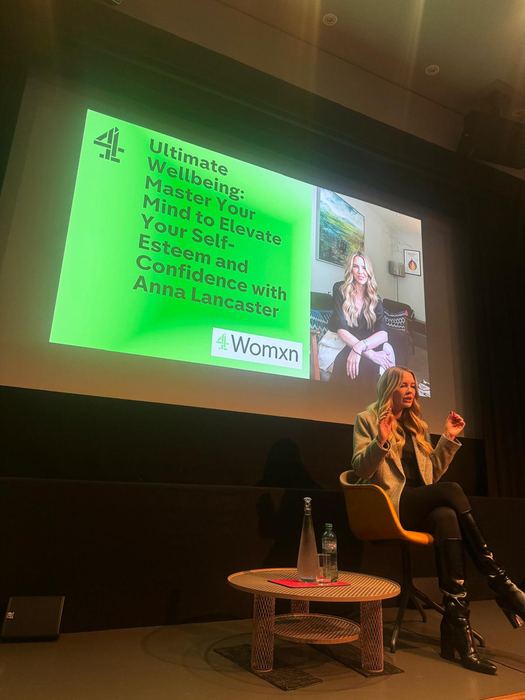
Channel 4, 4Womxn

Clinic owners and injectors are themselves high performers working under real pressure, client facing, revenue driven, constantly evaluated on results. What would mental fitness look like for the practitioner rather than the patient?

Injectors and clinic owners carry an unusual load: they’re clinicians, salespeople, therapists and business owners at once, and they’re judged on every face that walks out of the door. Mental fitness for them is about regulation, not resilience as endurance. Practically: short nervous-system resets between patients (even 60 seconds of slow, exhale-led breathing shifts state), a clear boundary between “I did my best clinical work” and “the patient’s emotional reaction”, and noticing perfectionism before it becomes burnout. I’d also say: deal with your own beliefs about worth and money. Practitioners who undercharge, overbook or can’t say no to a patient are usually running an old pattern, not a business strategy.

Body dysmorphia and over treatment are quiet but real risks in this industry. How should a clinic think about the psychology of a patient who keeps coming back for more, and where is the line between confidence seeking and something that needs a different kind of help?

With curiosity, care and clear boundaries. Returning for maintenance is normal. The flags are different: chasing changes others can’t see, dissatisfaction regardless of the result, distress or hours spent checking appearance, and requests that escalate each visit. Body dysmorphic disorder is a recognised mental health condition, and it’s over-represented in aesthetic settings, so validated screening questionnaires at consultation are a sensible standard. Where there’s a real concern, the kindest thing is to pause treatment and gently signpost to a GP or a clinician who specialises in BDD, rather than continuing to treat. Saying no well is a clinical skill, and patients will often remember the practitioner who cared enough to say it.

Any interesting trends you are seeing at the moment in your practice?

The biggest by far is anxiety. We’re living through what feels like an anxiety epidemic, and it’s the issue I work with most. It shows up in every kind of client, from CEOs to creatives, and often hides behind other requests: someone comes in about sleep, confidence or performance, and underneath it is a nervous system that hasn’t felt safe in years. In aesthetics, anxiety often drives the urge to fix or control how we look.

Alongside that, three other shifts stand out. First, people coming to me after rapid weight loss, including on GLP-1 medications, saying their body has changed but their head hasn’t caught up; the identity work lags behind the physical change. Second, high performers asking for regulation rather than relaxation: they don’t want to switch off, they want to stop running on adrenaline. Third, a real shift towards longevity thinking. Clients increasingly see stress, sleep and mindset as part of how they age, not separate from it. That’s exactly why I built Mental Longevity™.

If a clinic wanted to build mental fitness into the actual patient experience, not as an add on service but as part of how they practice, what would that integration realistically look like?

It starts with a mindset shift: the patient’s nervous system walks in before their face does. A frightened, rushed or self-critical patient will experience the same treatment completely differently from one who feels safe and seen. So integration isn’t about adding a wellness menu; it’s about designing every touchpoint around four things I build all my work on: safety, perception, recovery and identity.

  • Safety, before anything else. Calm starts at booking: clear information, no pressure, no rushed upsells. In clinic, think about lighting, waiting times and how the team speaks. The practitioner’s own state matters too; patients co-regulate with whoever is holding the needle, so a calm injector creates a calm patient.
  • Perception, at consultation. Ask “why now?” and “how do you want to feel?” not just “what would you like done?” Audit your language too. Words like “problem areas”, “fix” and “correct” quietly reinforce the belief that something is wrong with the person.
  • Recovery, in the chair and after. Offer a short guided breathing or calming audio for nervous patients. Design the mirror moment, because handing someone a mirror while they’re swollen and pink invites the inner critic. Follow up on how they feel, not just how they look.
  • Identity, over the long term. Build in a pause before big changes, notice patterns in patients who return often, and be willing to recommend less.

Then train the whole team, from reception to clinicians, to spot distress and refer with confidence. None of this needs a therapist on site. It needs a clinic that understands confidence is the real outcome, and that the mind is where it’s made or lost.

Where do you see the convergence of mental performance work and the beauty and aesthetics industry heading over the next few years? Is this a passing wellness trend or something structural that clinics and brands will need to take seriously?

Structural. The science linking stress, sleep and the nervous system to how we age is only getting stronger, and patients are already joining the dots themselves. I think the clinics that thrive in the next five years will be the ones who see themselves as being in the confidence business rather than the injectables business. That means mental wellbeing built into the patient journey, partnerships with mind specialists, and a willingness to sometimes treat less. “Wellness” as a word may be overused, but the shift underneath it isn’t going anywhere.

Editorial image