You’ve played a key role in bringing numerous brands and innovations to market. What criteria do you use to decide where to invest your time, expertise, and reputation?
I first need to believe in the concept, science, and the people behind the product and brand. Next, l study the data. I've worked in a dermatology research lab myself, and I've worked in product development for decades, helping build brands from concept to final product, which has helped me be able to analyze and add value to the brands I consult for. I prioritize safety, efficacy and cosmetic elegance, as well as novel ingredients and benefits. My standards and expectations are very high, and I appreciate that the brands I work with look to meet and even exceed those expectations.
Patients are more informed than ever, but also more influenced by social media. How do you balance evidence-based medicine with evolving patient expectations?
My goal is to present the best, clearest and easy to understand information available, in way that is compelling and fun to follow. My background as a journalist (before I became a doctor) comes in very handy here.
There are two levels of information: one is evidence-based medicine, which is ideal, but not always easy to come by in products that are not FDA approved drugs or devices. And then there is also what I call evidence-informed medicine, which is also important. This is medicine that may not have the blinded clinical trials, but it comes from decades of experience and an understanding of science. This should come from seasoned doctors who are treating patients, rather than from influencers who try things on themselves, and then give an opinion. Unfortunately the latter is too common and people buy into the hype rather than actual science.


How do you educate patients on long-term skin health versus quick-fix results, especially in a results-driven environment?
I start by listening and doing a full assessment. Getting the patient to share their story- what they see in themselves, what they love about themselves and what they would like to improve, what their skin and healthcare routine is like, what their life is like, what makes them happy and what makes them feel stressed. All of that is important for me to understand. It's a more holistic approach, and it helps me guide them, so the skin care and treatments I offer them will have a lasting impact and will help them age better, not just look better in the moment. We cover everything, from in-office treatments like injectables, lasers and devices for face and body, and personalized skin care, but also things like hormone therapy, supplements, exercise and other lifestyle recommendations.
What do you believe are the most important operational or strategic decisions that have contributed to your longevity and success in practice?
I give my 100% to every patient. I treat ever patient as I would a cherished family member, and they have my full attention when I'm with them. I see them as a whole person and my goal is to make their life, not just their skin, better. I feel incredibly lucky to get to do what I do every day, I am always looking to grow, learn and improve and I am always pushing out of my comfort zone to be the best doctor for my patients, and to be available for them as they need.

Dr. Doris Day | New York City, NY | @drdorisday
Are there areas of patient care you feel are currently underserved that the industry should be paying more attention to?
Absolutely. One underserved area is where medical, aesthetic, and longevity care intersect, especially for women in perimenopause and menopause. We see major changes in skin quality, collagen, inflammation, hair volume and quality, healing, and overall resilience during that time, and too often those concerns are either minimized or treated in a fragmented way.
Also, we need to pay more attention to conditions that may not be life-threatening but are deeply life-affecting — pigment disorders, hair thinning, acne scarring, and chronic inflammatory skin issues. These can have a tremendous emotional impact. The industry has an opportunity to be more comprehensive, more regenerative, and more attentive to quality of life, not just appearance.

Where do you see the biggest opportunity for innovation in dermatology and aesthetics over the next 3–5 years?
The biggest opportunity is in collagen and elastin regeneration, prevention of aging, and longevity-based approaches. We’re moving beyond simply correcting surface changes, toward supporting the biology of aging — fibroblast health, inflammation control, hormonal influence, collagen integrity, and skin function over time. Personalization is also going to become much more sophisticated. We’ll get better at matching the right intervention to the right patient at the right moment, not just based on age or appearance, but on what their skin is actually capable of responding to. That’s a much smarter and more effective model than treating every face the same way.

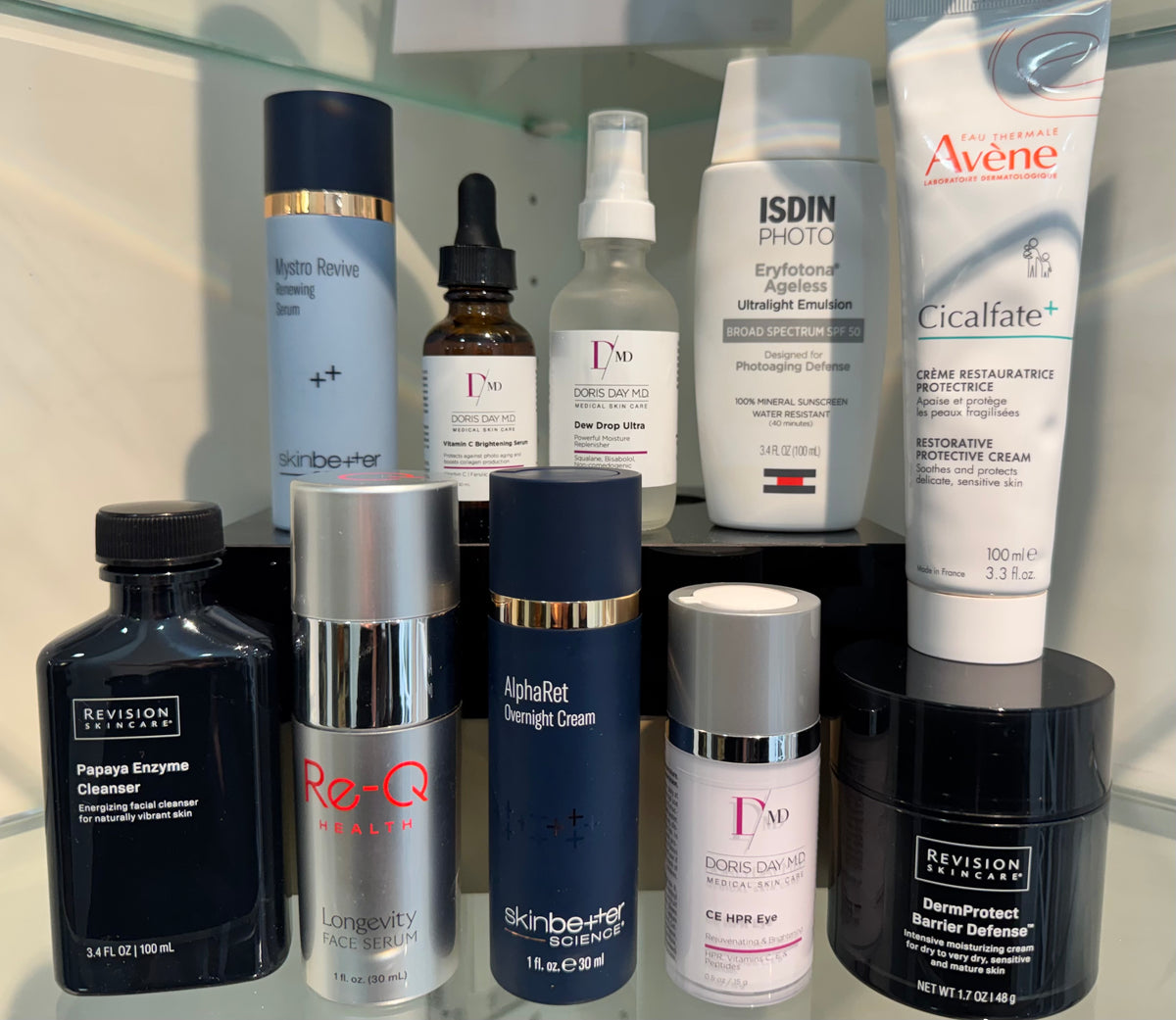
My Regimen (Shelfie):
AM
- Rinse with water
- SkinBetter Mystro Revive Renewing Serum
- Doris Day MD - Vitamin C Serum
- Doris Day MD - Dew Drop Ultra and/or Avene Cicalfate (if I am feeling dry)
- Isdin Eryfotona Ageless SPF 50
PM
- Papaya Enzyme Cleanser
- Re-Q Longevity Face Serum
- SkinBetter AlphaRet
- Doris Day MD - CE HPR Eye Cream
- Revision Dermprotect and/or Avene Cicalfate (if I am feeling dry)