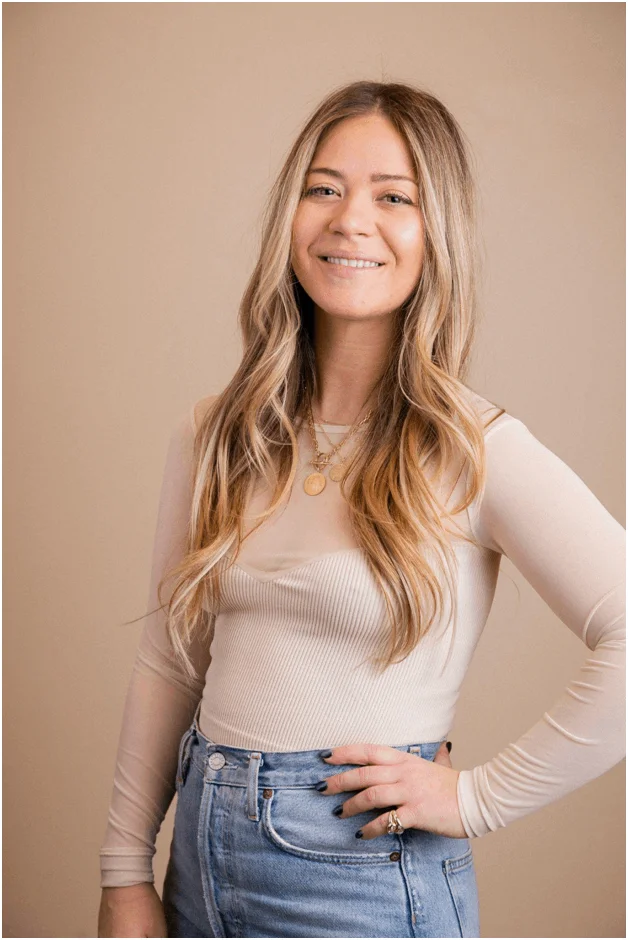
Dafna Gershoony, CEO and Co-Founder, CONTŌR

Dafna is a board-certified, New York State licensed Physician Assistant specializing in cosmetic dermatology for all skin types. With over six years of experience alongside leading cosmetic dermatologists in New York City, she has built a reputation for combining clinical precision with a refined aesthetic eye. As former Head of Skincare for a leading medical aesthetics startup, Dafna helped scale the brand's success while developing her expertise in bespoke injectable treatments and medical-grade skincare. Her approach, rooted in skin health and whole-body wellness, serves as the foundation of CONTŌR's treatment philosophy.
Dafna Gershoony, CEO and Co-Founder, CONTŌR

Your work is known for subtle, natural-looking results. How do you define "good aesthetic work" in an era where more treatment options than ever are available to patients?

For both my business partner and I, good aesthetic work is work you can't immediately pinpoint as "work." The measure of success isn't how much we did, it's whether someone looks like a refreshed, well-rested version of themselves rather than a different person entirely. We have more tools available to us now than at any point in this field's history, and that's a wonderful thing, but more options also means more ways to overcorrect. At CONTŌR, our shared philosophy was born out of restraint: treat the face as a whole, respect its natural architecture, and never chase a trend at the expense of a patient’s outcome.

Tell us a bit about your audience, which we know is younger — what is different about a younger audience?

Younger patients are coming to us earlier and smarter than previous generations did; often in their late twenties, thinking about prevention rather than correction. What's different is the mindset. They're less interested in "fixing" something and more interested in maintaining and protecting what they already have. They're also incredibly informed, sometimes misinformed via social media. At CONTŌR, our philosophy of subtlety actually matters even more with this patient base, because the choices we make at twenty-eight set the tone for how someone ages over the next several decades.

You host a lot of great events in partnership with fashion designers or other partners — how does that help you with patient retention and how do you decide who to partner with?

For us, it's about showing up in the places our patients already are. Whether it be the fitness studio they go to three times a week, the boutique they love or the neighborhood spot they recommend to friends. We're a small business ourselves, so partnering with other local brands who share our values feels natural, rather than reaching for a big name purely for visibility. When we collaborate with a fitness brand or a fashion label or even a favorite local café, it's because we genuinely believe in what they're putting into the world. It reinforces that we think about beauty the way our patients do: elevated, personal, effortless, woven into everyday life rather than separate from it. That authenticity is what makes patients stick with us for years instead of treating us as a one-off appointment.

What's the most important lesson you've learned about facial aesthetics that only comes with years of treating patients?

What's the most important lesson you've learned about facial aesthetics that only comes with years of treating patients?

That less is almost always more, but knowing exactly how much less takes years to calibrate. Early in your career, it's tempting to treat the area someone points to. With experience, you learn to treat the face as an interconnected system a shadow here is often the real story behind a line there and that sometimes the most powerful intervention is doing very little, very precisely. The other lesson is patience: the best results often reveal themselves over weeks or requires multiple sessions, not in the moment a patient leaves the chair. Teaching patients to trust that process is something you only really internalize with time.

How do you approach patients who come in asking for one treatment when you believe something entirely different would better serve their long-term goals?

At CONTŌR, we always start by listening to what patients are actually trying to achieve, because the treatment they're requesting is usually a proxy for a feeling they want i.e looking less tired, more like themselves, more confident. Once we understand that, we are honest with them about what we think will and won't get them there, even if it's not what they walked in asking for. I think I can speak for all our providers when I say we would rather have that slightly uncomfortable conversation upfront than deliver a treatment that technically does what was requested but doesn't solve for the concern. Patients respect that honesty, and it's a big part of why they trust us with bigger decisions down the line.

Have you become more conservative or more aggressive with treatments over the course of your career, and why?

Over the years I think most providers have become more conservative, including myself without question. Early on, there's a temptation to show patients a dramatic before-and-after because it feels like proof of skill. Over time you realize the real skill is in the result that nobody can quite put their finger on. That subtlety requires more precision and judgment than going big. I've also seen more long-term outcomes with each year of experience, including the ones that didn't age well, and that's taught me to weigh sustainability as heavily as immediate impact.

Firstly congrats on your success, and secondly, tell us about your decision to expand to a new location. How did you make that decision, and what metrics, signals, or instincts gave you confidence that it was the right time to grow?

Thank you! The decision came from a combination of data and intuition. My partner and I were seeing consistent waitlists, strong retention, and patients traveling further than we expected to see us, which told us the demand was real and not seasonal. But the instinct piece mattered just as much: we wanted to be confident we could replicate our culture and standard of care in a new space before we replicated our square footage. Growth only makes sense if it doesn't dilute the experience that built the first location.

How has social media changed patient expectations, and how do you help patients navigate what's realistic versus what's trending?

Social media has made patients more visually literate but also more exposed to filtered, edited, and frankly unrealistic versions of "natural." Part of every consultation now involves gently resetting expectations and explaining what's achievable on their specific face versus what's achievable with an app or a filter. Once patients understand the difference, they almost always choose the realistic, sustainable path, because what they actually want is to look like themselves on a good day, not like someone else entirely.

Is there a technique, treatment approach, or philosophy that has become a signature of CONTŌR and consistently delivers better outcomes than patients expect?

One of CONTŌR’s signature philosophies is our approach to facial balancing rather
than isolated, single-area treatment. Rather than treating the lips, under-eyes, or jawline independently, we evaluate the face as a whole and consider how each feature relates to the others—because that’s ultimately how facial harmony is perceived.

Patients are often surprised to learn that the area they initially focused on isn’t always the area that will create the most meaningful result. By taking a comprehensive approach, we’re able to create outcomes that feel refined, balanced, and natural rather than overcorrected or trend-driven.

At CONTŌR, we believe in micro-enhancements over time. Small, intentional
adjustments performed gradually to support long-term results rather than dramatic,
immediate change. This allows us to preserve individual features while enhancing
overall harmony and aging proactively and thoughtfully. The result is consistently the response we aim for: you still look entirely like yourself, just more refreshed, balanced, and confident.

Editorial image