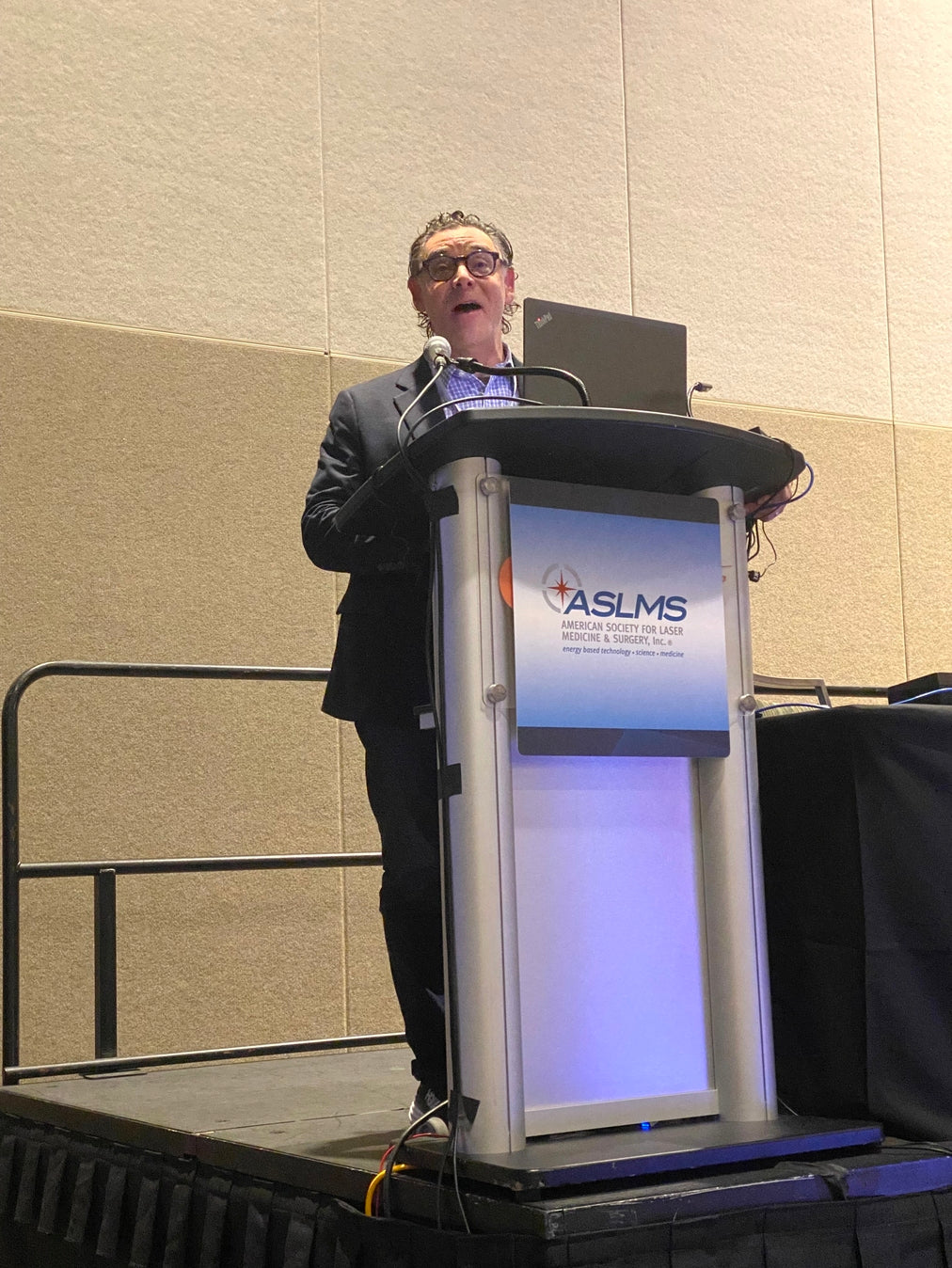
In Practice: Joel L. Cohen, MD (FAAD, FACMS), AboutSkin Dermatology and Aesthetics

Dr. Joel L. Cohen is an internationally recognized, board-certified dermatologist and leading expert in aesthetics, skin cancer, lasers, and energy-based devices. He is Director of AboutSkin Dermatology and Aesthetics and AboutSkin Research in metropolitan Denver, Colorado, and serves as Associate Professor of Dermatology at the University of California, Irvine. An accomplished researcher, educator, and author, Dr. Cohen has contributed to more than 330 medical articles and book chapters and co-authored three academic textbooks, including a leading reference on botulinum products. He has served on global task forces focused on lasers, energy-based devices, and injectable aesthetics and has taught dermatology residents and physicians for more than two decades. Recognized as a Top Doctor by U.S. News & World Report, Castle Connolly, and 5280 Magazine, Dr. Cohen has received numerous honors for education, patient safety, mentorship, and public service. He is frequently featured as an expert in leading media outlets including Vogue, TIME, The New York Times, Allure, and Glamour, and serves as one of two Medical Directors of Cosmetic Physician Partners.
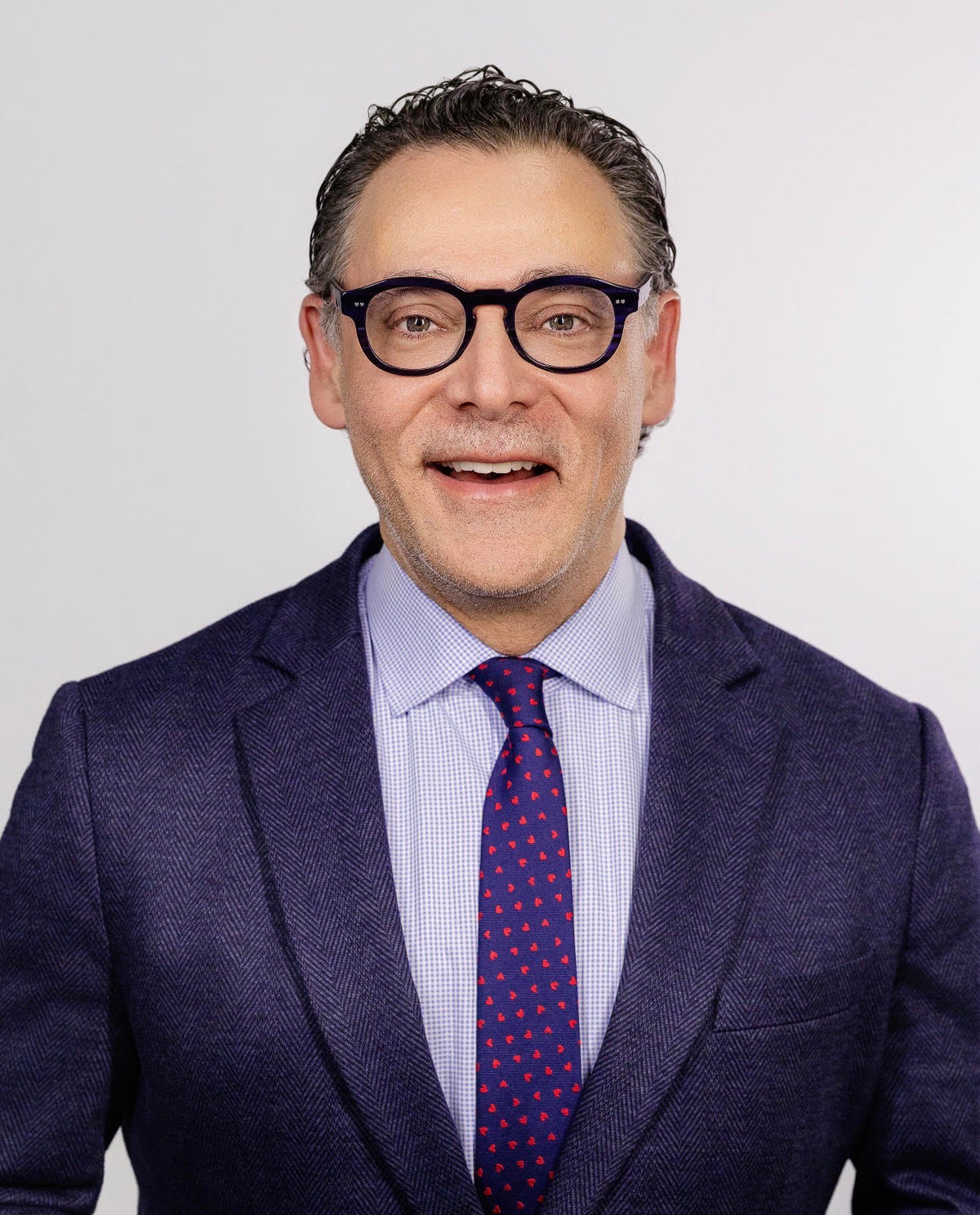
In Practice: Joel L. Cohen, MD (FAAD, FACMS), AboutSkin Dermatology and Aesthetics

In practice, what do you actually spend the most time thinking about in your work?

There are really two sides to it — the patient side and the side of running a practice administratively. Focusing on the patient side, a typical day for me might include a few consults and a couple of full-field resurfacing procedures. Patients often come in with one specific concern — say, etched lines on the upper lip — and they assume there's a single treatment that will fix everything. It's hard to get people to understand that results really come from a combination of treatments.

Take that upper lip example: we want to resurface the etched lines that are already there, but we also want to use a neuromodulator to relax the muscle movement that keeps re-forming those lines in the first place. Patients often ask, "Can't you just put a little injection here and make it go away?" And the honest answer is no. If you try to fill those very fine "barcode" lines, you often end up with visible cobblestoning or bumps — the kind of thing you notice on someone's lip in good lighting at a professional meeting.

We want people to look natural and good, and when they undergo something bigger like a resurfacing, we want to optimize both the immediate and long-term results. Getting patients to understand that it's a combination of treatments — not a single fix — is genuinely one of the harder parts of the job. People are used to a "add to cart" mentality: I have a need, I buy the thing, it's solved. Aesthetic treatment doesn't really work that way.

Editorial image

What's one mistake you see providers make when treating patients in that same "one-and-done" way?

Patients will sometimes push hard for filler as a shortcut — "can't we just try filler?" But filler can really only address lines large enough to fit the tip of a 30-gauge needle into. It can't get into the very fine lines.

And when you look closely at sun damage, it's rarely just about a single line — it's the textural change, enlarged pores, fine lines, and crepiness happening across the whole area. If you fill only the more visible lines, it can actually draw more attention to the sun damage, dilated pores, and that orange-peel (peau d'orange) texture surrounding it. I spend a lot of time showing patients photos and emphasizing that we need to pick the right tool for the right job.

How has your approach evolved over the years?

Patients will sometimes ask for a quick, temporary treatment because they have an event coming up. The reality is, we don't want to choose the wrong treatment just to meet a deadline, because they'll end up disappointed — or someone will point it out to them.

So now I really push for the right timing. Best case, someone comes in nine or ten months before their daughter's wedding, not three weeks before. We need to wait for the right window and choose the right tool for the job, rather than rushing into something that isn't ideal.

What separates a good result from an exceptional result for you?

It really comes down to combination treatment — and making sure people can't tell exactly what's been done. My wife, who's a pediatrician, always tells me she doesn't want to look like she's married to an aesthetic dermatologist who does this every day.

She has rosacea, and we knock down the redness without making it disappear entirely. When she gets injectables, we place small aliquots in specific areas rather than erasing everything — at 53, she still wants some natural movement in her face. We also do a lot of laser work, because laser is something people often can't detect. She had fairly significant acne scarring when I met her; we've been married 25 years, and through a series of resurfacing treatments plus ongoing maintenance, very little of that scarring remains.

There's also a growing body of research showing these non-ablative maintenance laser treatments may do more than improve appearance — some studies show roughly a 50% reduction in non-melanoma skin cancers (basal cell and squamous cell) with these minimal-downtime, non-ablative treatments.

You co-authored consensus recommendations on managing vascular occlusion from filler using hyaluronidase. How do you talk patients through that risk before treatment, and what do you want other injectors to understand about recognizing it?

There are real risks with the aesthetic procedures we do. With heavy laser resurfacing, the main risks are infection or skin discoloration. With filler, patients often think short-term — "just don't leave me bruised or lumpy." But there are more serious concerns: a delayed inflammatory reaction that can show up months or even years later, and, more rarely, filler getting into a blood vessel. If that happens, the area of skin supplied by that vessel can lose its blood supply and begin to necrose — and if that vessel connects to the eye, it can even cause blindness.

We talk to patients about which areas carry higher risk for these complications, and that can change how — or whether — we inject a given area. Take the anterior and medial cheek: we're often trying to augment the deep medial fat pad, but there are vessels nearby, including the angular and infraorbital arteries. In areas like that, I use a cannula rather than a needle, because it lowers the risk of entering a vessel.

If you do get into a vessel, recognizing it matters — you might see skin blanching or a patient reporting significant discomfort. If we see blanching, we stop immediately. I've written several protocols on this, one dating back to 2008, and the core approach hasn't changed much: if you're using a hyaluronic acid–based product, you at least have the option of hyaluronidase to help reverse the problem, since it can cross the vessel wall. I recently published an article on this — on the vascular networks involved, called angiosomes — building on some excellent work out of the Netherlands. I also teach on this regularly, including as faculty at the University of California, Irvine, where I lead online lectures with residents and fellows roughly every six to eight weeks. A lot of these safety protocols actually originated from those teaching conversations. My wife and a lot of my friends call me "Safety Joel."

What separates products you actually use from products you simply know about? How do you choose what to work with — across injectables, skincare, and energy-based devices?

What separates products you actually use from products you simply know about? How do you choose what to work with — across injectables, skincare, and energy-based devices?

Beyond "Safety Joel," I've also long served on the laser society's safety task force, where we've filmed training videos on things like managing two lasers and two foot pedals safely in the same room, making sure the right glasses are on, and confirming the correct laser is calibrated and active before treatment.

When it comes to products, I'm very focused on the data — what the safety studies actually show. I use the same mental framework whether I'm choosing a filler or an energy device: What does the data show? What do the safety studies say? Is this the right tool for this specific job? Am I placing this at the right tissue plane — subdermal versus down on bone — and am I comfortable with how that's going to look?

Another nickname I've picked up is "Joel PubMed Cohen," because I'm always citing literature to explain my reasoning. At this point I've personally co-authored 336 articles and three hardcover textbooks, and I take that seriously — it shapes what I'm comfortable putting into a patient's face for the long term. I've also looked closely at manufacturer database analyses and was lead author on an open-access paper examining which products and treatment areas carry a higher risk of delayed inflammatory reactions. There's a lot to weigh.

How do you actually run your practice — do you develop complementary treatment protocols yourself, or with your staff?

We have around 36 energy-based devices in the practice. When I think about my practice, I always start with what's appropriate for this specific patient's specific concern. A lot of spas out there only have one or two tools — an IPL device, maybe a radiofrequency microneedling device — and when all you have is a hammer, everything looks like a nail.

I've worked hard to educate my staff through regular "lunch and learns" on the concerns patients bring in. I call it the "six tissue issues" — the six main aesthetic concerns I see in consultations every day.

I think about this constantly, even outside the office. When I'm traveling and teaching — which is often — I can usually tell who's at the hotel for an aesthetics meeting versus who's just a regular guest. For someone who isn't a patient, I still find myself thinking, "If I were their doctor, what would I address first? What's their signature issue?" — the main thing that, if addressed, would genuinely make them feel more confident. There's good research showing that when you address the specific issue that bothers someone, they feel better about themselves and communicate more authentically.

My wife is a good example. When we met, she was in her pediatric residency, studying for her boards, and — at 26 — already developing etched glabellar lines from frowning while she studied. We addressed that gently, over time. Her acne scarring was more significant, but it wasn't something I brought up early on since it didn't bother her. As my training and experience grew — I run a lot of clinical trials for companies like Allergan, Galderma, Merz, and Revance, particularly on lasers and resurfacing devices — the technology and our approach to acne scars kept improving, especially with the more recent concept of "laser-cing" as a continuum of treatment. Comparing her original photos to now, the difference is significant.

The bigger lesson: combination treatment usually gets the best results, and some areas won't respond to one approach, so you shift gears. Acne scars are a good example — sometimes an area stays bound down and needs to be released and lifted, often with filler underneath, to get a good outcome. We have to think about what actually bothers a patient, which isn't always the same as what we, clinically, might flag as their "signature issue."

Editorial image

How are you incorporating GLP-1s, and everything around them, into your practice — and where do you see that going?

We do have GLP-1s in our practice, though I'm not the one prescribing them — we have someone on staff who does. People commonly talk about "Ozempic face," and we do need to address that, but there's a lot that gets discussed far less: the muscle changes.

We've long known that women experience sarcopenia — age- and hormone-related muscle loss — alongside osteopenia and bone changes, and GLP-1 use can affect muscle as well. We also see some patients experience acute hair shedding, known as telogen effluvium. So we try to talk to patients about the whole picture, not just facial volume loss.

I don't want to start major facial corrections until a patient has lost the weight they're aiming for and has genuinely stabilized. I saw a patient just this week who wanted to start early — she still planned to lose 50 pounds. I told her that what we place now may not be in the right spot once her face changes further, and that it's worth waiting until she's stable for six to nine months before we talk about correction.

On the muscle side, we offer treatments that target musculature — core strength, for example. I've done research for BTL and was lead author on a study using imaging to evaluate Emsculpt Neo's effect on the abdomen and flanks. Core strength matters a lot, especially for someone who's older and struggling to get up from the floor or a chair. We see similar muscle changes in postpartum women. For areas that are hard to train directly — like the pelvic floor — we also use treatments like Emsella, which was originally approved for urinary incontinence (often postpartum, though men use it too for prostate-related issues) and has more recently gained attention for its effects on sexual function.

And we try to stay ahead of the hair loss conversation too — letting patients know it's common, and starting with simpler interventions before moving to more involved options as needed.

The industry has expanded so much — from neuromodulators and skincare into devices and now GLP-1s and wellness. Longevity products are a hot but tricky category, especially since they don't have the dramatic before-and-after photos your industry has been built on. What's your messaging to patients and peers about longevity products?

I look at the data and at what's synergistic with the treatments we're already doing. For example, after a resurfacing treatment, if a patient doesn't want to add something like PDGF or a light PRP application, that's completely fine — they don't need to. But we do walk through the data: it may help you heal faster, and there may be a measurable bump in your overall response, and here's why, based on the preliminary studies available.

It's worth being honest about scale, too. I've run clinical trials for essentially every neuromodulator on the market, and for many hyaluronic acid fillers — those trials involve hundreds, sometimes thousands, of patients with very specific follow-up. Some of these newer longevity studies are much smaller — sometimes 30 or 40 people — which makes it harder to draw firm conclusions. That said, even in smaller studies, it matters whether the data shows real statistical significance rather than just a trend.

Ultimately, I think the industry can supplement the traditional before-and-after with the actual data and literature behind a product — that's something patients and peers should be able to understand and evaluate on its own merits.

Editorial image