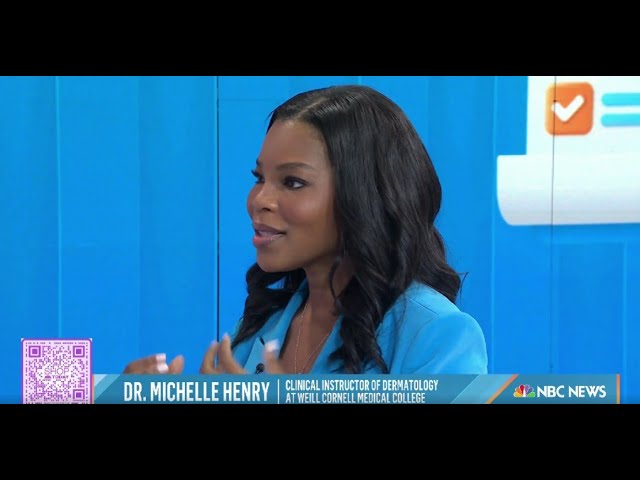
In Practice: Michelle Henry, MD FAAD, Skin & Aesthetic Surgery of Manhattan

Dr. Michelle Henry is a board-certified dermatologist, dermatologic surgeon, international speaker, and founder of Skin & Aesthetic Surgery of Manhattan and The Henry Research Group. A Clinical Instructor of Dermatology at Weill Cornell Medical College, she specializes in general dermatology, Mohs surgery, cosmetic dermatology, hair restoration, and skin rejuvenation. Dr. Henry completed her dermatology residency at Mount Sinai Hospital, where she served as Chief Resident, followed by a fellowship in cutaneous oncology, Mohs micrographic, and reconstructive surgery at Harvard Medical School. Recognized as a Castle Connolly and New York Magazine Top Doctor, she has been featured in Forbes, The New York Times, Harper's Bazaar, Byrdie, and Today, while also serving on multiple medical boards, conducting FDA clinical trials, and contributing extensively to dermatologic research and education.
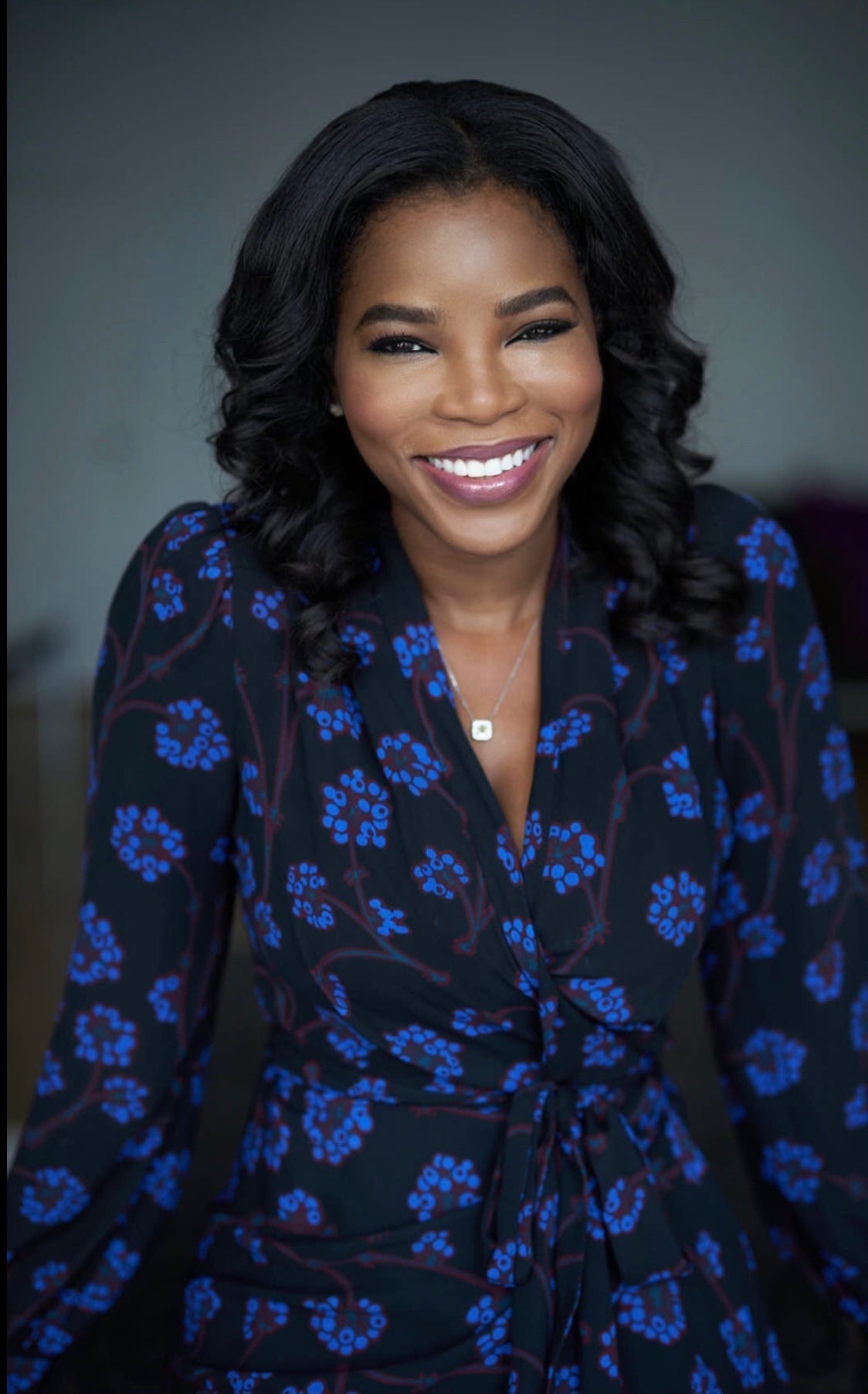
In Practice: Michelle Henry, MD FAAD, Skin & Aesthetic Surgery of Manhattan

You’ve built a career that spans high-risk skin cancer surgery, cosmetic dermatology, and media. How have those different worlds shaped the way you approach patient care and decision-making?

I think each of those worlds has made me a more thoughtful physician.

Skin cancer surgery teaches precision and discipline. When you are treating high-risk skin cancer, the stakes are very real. You learn to make decisions carefully, to respect anatomy, to communicate clearly, and to never lose sight of the person behind the diagnosis.

Cosmetic dermatology has taught me how deeply appearance is connected to confidence, identity, and emotional well-being. It is not superficial when someone wants to look like the best version of themselves. There is real power in helping people feel restored, refreshed, and more comfortable in their skin. The anatomical skills from my dermatologic surgery training also directly inform my cosmetic work. I understand the layers that change with aging and how to restore them thoughtfully, which makes me a safer cosmetic dermatologist. That depth of anatomy understanding helps me make decisions that are both medically sound and aesthetically refined.

My role in the media has shaped me in a different way. It has taught me how important education is to patient care. Patients are constantly receiving information, and not all of it is accurate or contextual. Being in media has made me even more committed to translating science in a way that feels accessible, honest, and empowering.

Together, those experiences have made my approach very balanced. I am data-driven, but I am also deeply human-centered. I want my patients to feel safe, informed, seen, and never rushed into a decision that is not right for them.

Editorial image
Editorial image

You’ve said your approach is rooted in both science and artistry. How do you balance those two, especially when patient expectations are increasingly influenced by social media?

Science is always the foundation. It tells us what is safe, what is effective, what is anatomically sound, and what will age well over time. But artistry is what allows us to personalize those tools for the individual in front of us.

No two faces are the same. No two skin types behave exactly the same. A treatment plan has to consider bone structure, proportions, skin quality, lifestyle, culture, age, and even how someone emotionally relates to their appearance.

Social media has made this more complicated because patients often come in with images or trends that may not be appropriate for their face, their skin, or their goals. I never dismiss that. I listen because it gives me insight into what they are hoping to feel. But then my job is to translate that desire into something safe and realistic.
The goal is never to make someone look like a trend. The goal is to help them look like themselves but more rested, confident, and beautifully preserved.

You founded Skin & Aesthetic Surgery of Manhattan in one of the most competitive markets globally. What did you do differently early on that helped you stand out and build trust?

From the beginning, I wanted the practice to feel highly sophisticated clinically, but also incredibly personal. New York patients are discerning. They have options. So trust is everything.

I focused on being deeply thorough rather than transactional. I wanted every patient to feel that their concerns were being heard, that their treatment plan was customized, and that they were receiving honest guidance — even if that meant telling them they did not need a procedure.

I also built the practice around the idea that medical dermatology, skin cancer surgery, cosmetic dermatology, and skin of color expertise should not exist in separate silos. Patients are whole people. Their pigment, their aging, their scars, their cancer risk, their acne, their melasma, and their hair are often connected.
I think what helped us stand out was that we brought a very high-touch, academically informed approach to aesthetic and medical care. We were not just chasing volume. We were building relationships. That takes longer, but it creates a much deeper kind of trust.

Many physicians are incredible clinicians but struggle with the business side. What were some of the biggest lessons you’ve learned transitioning from doctor to founder?

One of the biggest lessons is that being an excellent doctor and being an excellent founder require different muscles.

As physicians, we are trained to be perfectionists, to solve problems ourselves, and to work incredibly hard. But as a founder, you have to learn how to lead, delegate, build systems, and communicate a vision. You cannot scale excellence if it only lives in your hands.

I also learned that culture is not something you talk about once. It is something you build every day in how you hire, train, correct, celebrate, and how you respond to your staff when things go wrong.

Another major lesson is that the patient experience begins long before I walk into the exam room. It starts with the first phone call, the first email, the way someone is greeted, the way their questions are answered, and the way they feel after they leave.

The business side, at its best, is not separate from patient care. It is an extension of patient care. A well-run practice allows the physician to deliver better, more consistent, more compassionate care.

You’ve been very focused on treating diverse skin types. What do you think the industry still gets wrong when it comes to treating skin of color?

The industry still too often treats skin of color as a specialty category rather than as an essential part of dermatology.

Diverse skin types are not niche. They are the global majority. And yet historically, clinical research, product development, device testing, textbooks, and marketing have not always reflected that reality.

One of the biggest mistakes is assuming that treatments behave the same way across all skin tones. They do not. In skin of color, inflammation, pigment, scarring, keloids, and hair disorders can present differently and require a different level of nuance. The consequences of getting it wrong can be significant, including hyperpigmentation, hypopigmentation, burns, scarring, or a complete loss of trust.
We also need better representation in clinical trials, better education in residency training, and more thoughtful product and device development from the beginning, not as an afterthought.

Equity in dermatology is not just about access. It is about competence, respect, and designing care that truly understands the patient.

Editorial image

There’s been a huge rise in physician-led brands and platforms. From your perspective, what actually builds credibility today, and what feels more like noise?

Credibility is built through consistency, transparency, and real expertise.

Patients and consumers are smart. They can feel when something is thoughtful and when something is purely performative. A physician-led brand should be rooted in clinical experience, scientific integrity, and a genuine understanding of patient needs.

What feels like noise is when medical authority is used mainly as a marketing tool. A white coat alone does not make something meaningful. The question is: Is there a real point of view? Is there evidence? Is there a clinical need being addressed? Is the physician willing to educate honestly, including discussing limitations?

For me, credibility also comes from being willing to say, “This is not for everyone,” or “This is promising, but we need more data.” That kind of honesty may not always be the loudest message, but it is the one that builds long-term trust.

You’re involved in research, clinical trials, and product development. How do you evaluate whether a product or technology is truly innovative versus just well-marketed?

I always start by asking: What problem is this actually solving?

A product can have beautiful packaging, strong branding, and compelling language, but if it does not meaningfully improve outcomes, safety, access, tolerability, or patient experience, then I would not call it true innovation.

I look at the mechanism of action, the quality of the data, the study population, the endpoints, and whether the results are clinically meaningful rather than just statistically interesting. I also pay close attention to whether diverse skin types are included, especially if the product or device will be used broadly.

In practice, I ask myself: Would I recommend this to a patient I care about? Would I use this in my own office? Does it make care better, safer, more precise, or more inclusive?

True innovation usually feels clear. It solves a real problem. Marketing often tries to create urgency around a problem people did not know they had.

When you think about the future of dermatology, what excites you most, and what concerns you?

I am incredibly excited by how personalized dermatology is becoming. We are moving toward more precise care — treatments that better account for genetics, skin tone, biology, lifestyle, and individual risk. I am excited by advances in skin cancer detection, regenerative aesthetics, hair restoration, inflammatory skin disease, and technology that can help us diagnose earlier and treat more thoughtfully.

I am also excited by the democratization of education. Patients are asking better questions. They are more engaged. They want to understand what they are putting on their skin and what treatments they are receiving.

What concerns me is the speed at which misinformation travels. Dermatology is visual, so it is very vulnerable to trends, before-and-after culture, and oversimplified advice. I worry about patients being overtreated, undertreated, or misled by marketing that looks like education.

The future of dermatology will be extraordinary if we keep science, ethics, and humanity at the center. Technology will continue to evolve, but the most important part of our work will always be trust.  The relationship between physician and patient, and the responsibility we have to guide people safely becomes even more important in an increasingly noisy world.

Editorial image